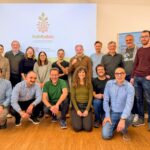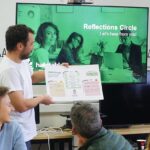



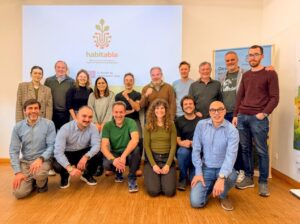
From 9 to 13 March 2026, the Habitable CoVE Alliance convened in Salzburg, Austria, for an intensive face-to-face training hosted at the Fachhochschule Salzburg Campus Kuchl. This key activity marked a significant step in the development of the Habitable multifunctional Skills Hub, designed to support training, certification, and career pathways in the sustainable habitat sector. Bringing together expert trainers from across Europe, the week focused on strengthening capacities in Green and Sustainable Training Design and Digital Competence—two critical dimensions for the future of vocational education and training (VET). The programme combined strategic discussions with hands-on learning. Sessions explored labour market alignment, quality assurance, and continuous innovation in learning systems, alongside practical modules addressing apprenticeship transformation, inclusive learning environments, and the integration of smart digital tools into teaching practices. A defining feature of the training was its strong connection to real-world applications. Participants engaged in study visits that brought sustainability and innovation to life. At Grüne Erde GmbH, they examined circular economy principles within the wood sector, gaining insights into environmentally responsible production processes. Meanwhile, the visit to Pioniergarage Salzburg offered a first-hand look at advanced digital learning technologies, demonstrating how innovation can be effectively embedded into vocational education. These experiences enabled participants to bridge theory and practice, fostering a deeper understanding of how green and digital transitions can be translated into impactful training methodologies. Beyond the formal sessions, the training provided a valuable platform for collaboration and exchange among partners. By sharing expertise and aligning approaches, the Alliance reinforced its collective capacity to deliver high-quality, future-oriented vocational training. As the week concluded, participants left with enhanced skills, new perspectives, and a shared commitment to advancing the Habitable Skills Hub as a cornerstone for vocational excellence in sustainable habitat.
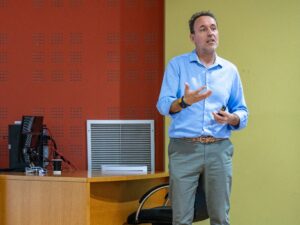
The Multiplier Event of the HABITABLE project brought together key stakeholders from education, training, and the habitat sector for a panel discussion titled “Bridging the Gap between the Labour Market & Learning Pathways in the Habitat Sector in Greece.” The discussion focused on the evolving education and training landscape in Greece and the skills required to support the green and digital transition. Facilitated by CluBE – Cluster of Bioeconomy and Environment of Western Macedonia, the panel featured contributions from the University of Thessaly, DIMITRA – Education & Consulting, VET providers, and habitat sector enterprises ALFAWOOD and CLIAPAS S.A. Speakers shared insights from their respective fields, highlighting current skills gaps, emerging labour market needs, and existing training initiatives relevant to the habitat sector. The discussion also encouraged speakers to reflect on potential policy recommendations that could better align learning pathways with labor market demands, supporting a more effective transition towards sustainability and digitalization. Emphasis was placed on strengthening cooperation between academia, VET, and industry as a key driver for future-ready skills development. The panel contributed to HABITABLE’s broader objectives of fostering dialogue among stakeholders and promoting inclusive, demand-driven education and training pathways that respond to the needs of the habitat sector in Greece.
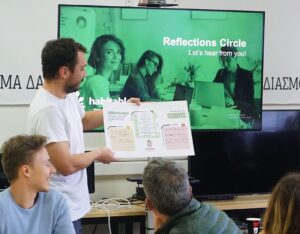
The workshop session “Mind the Gap: Collaborative Policy Design for Green and Digital Skills Education in the Habitat Sector”, organized by @CluBE – Cluster of Bioeconomy and Environment of Western Macedonia, brought together university students and members of the HABITABLE consortium for an interactive exchange on the future of skills in the habitat sector. The session focused on identifying existing gaps in green and digital skills education, drawing on the perspectives of different stakeholder groups. Through collaborative discussions and participatory activities, participants mapped current needs and challenges affecting education and training pathways, while exploring how policy design can better respond to emerging sectoral demands. The workshop placed strong emphasis on co-creation, encouraging students and experts to jointly develop practical and forward-looking policy recommendations. The outcomes of the session contribute to HABITABLE’s broader mission to support sustainable, inclusive, and future-ready skills development in the habitat sector, reinforcing the link between education, innovation, and policy-making.
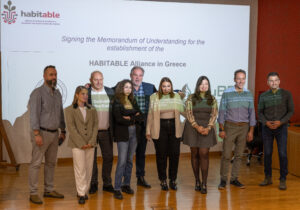
The Multiplier Event of the HABITABLE project concluded with the signing of a Memorandum of Understanding (MoU) establishing the HABITABLE Alliance in Greece, marking a significant milestone for national cooperation in the habitat sector. Under the framework of the Habitable CoVE project, the official launch of the Greek Alliance reflects HABITABLE’s continued expansion across Europe and its commitment to strengthening collaboration among key stakeholders at regional and national level. The Memorandum of Understanding was formally signed by @DIMITRA Education & Consulting SA, @CluBE – Cluster of Bioeconomy and Environment of Western Macedonia, and the @University of Thessaly. The HABITABLE Greek Alliance aims to promote the exchange of knowledge, best practices, and innovative training solutions, supporting a coordinated and strategic response to the green and digital transition shaping the habitat sector. By bringing together education providers, clusters, and academic institutions, the alliance reinforces synergies between skills development, innovation, and labour market needs. The establishment of the Greek Alliance is another strong example of HABITABLE’s collaborative and European approach—connecting regions, talent, and innovation to build a sustainable and future-ready habitat sector.
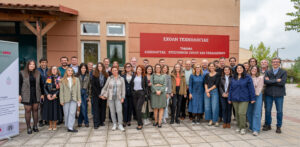
The HABITABLE 4th Transnational Project Meeting (TPM) and Multiplier Event was successfully held in Karditsa and Larisa, Greece, bringing together project partners, stakeholders, and experts from across Europe for three days of intensive collaboration, dialogue, and knowledge exchange. Co-organized by the University of Thessaly, DIMITRA Education & Consulting, and CluBE – Cluster of Bioeconomy and Environment of Western Macedonia, the event showcased Greece’s active role in advancing innovation, sustainability, and vocational excellence within the Habitat sector. Productive Discussions and Knowledge Exchange in Karditsa The core programme took place at the University of Thessaly in Karditsa, where partners engaged in dedicated project meetings focused on reviewing progress, coordinating upcoming actions, and ensuring alignment across work packages. A guided tour of the university facilities further strengthened links between academic research, vocational education and training, and applied innovation. A central highlight of the event was the Multiplier Event, which brought together educators, policy makers, SMEs, and sectoral stakeholders. Through a panel discussion and an interactive workshop, participants explored critical topics such as green and digital skills development, work-based learning, social inclusion, and the evolving needs of the Habitat skills ecosystem. The open exchange of perspectives reaffirmed the importance of cross-sector and multi-level cooperation at both regional and European levels. Strengthening Industry Links and National Alliances The final day in Larisa focused on strengthening the connection between education and industry. A study visit to ALFAWOOD provided participants with valuable insights into practical examples of business–education cooperation and sustainable production processes in the habitat sector. The programme concluded with a dedicated project meeting on National Alliances, highlighting the crucial role of regional ecosystems in ensuring the long-term impact and sustainability of the HABITABLE initiative. Beyond the formal sessions, the event fostered meaningful networking through shared meals and informal discussions, further consolidating the HABITABLE community and its shared vision for the future. Overall, the 4th TPM & Multiplier Event marked a significant milestone for the project, reinforcing cooperation among partners and translating strategic objectives into concrete actions towards a more inclusive, green, and digitally skilled Habitat sector in Europe.